 By
By The persistent problems associated with the quality of services in Nigeria’s telecoms industry cannot be solved by the issuing of fines and sanctions.
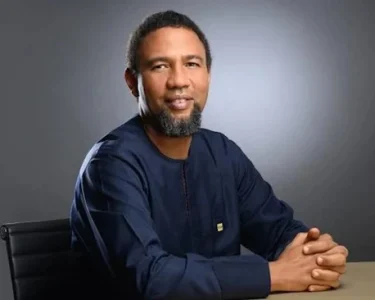
According to the chairman of the Association of Licensed Telecommunications Operators of Nigeria (ALTON), Engr. Gbenga Adebayo, Nigerian telecom operators operate within the same socioeconomic framework as all other sectors of the economy.
Adebayo revealed at the first edition of the Nigeria Information Technology Reporters Association (NITRA) Scientific and Innovation Conference that the fines and sanctions cannot remove all those elements of interference that often affect the ability of service providers to provide services.
He stated that “you cannot absolve the problem of society from quality of services as they solve the problem in the development of the services,” adding that if you don’t remove the element that leads to the issue of quality of services, fines and penalties do not help.”
The ALTON Chairman said further that the Nigerian Government often blames the telecoms operators for not being able to provide the required QoS, whereas the operators do not have the Right of Way (ROW), stressing that “if you want to apply for a right, you apply for a right on paper. “You wait 10 days to get that right.”
He said, “You wait an hour to get that right. We cannot absolve the consequences of those problems. That’s why I say that you cannot solve the problem of QoS with fines and penalties.”
Adebayo, who was also the keynote speaker at the event, explained, “If you don’t remove the elements that lead to the issue of quality of services, fines and penalties do not help. It doesn’t help. We have seen experiences of fines, penalties, and infractions. It doesn’t work.”
He added that the industry regulators forget that the telecoms operators operate in the same ecosystem as other sectors of the economy, noting that. “It’s convenient to ban operators. If you ban and penalise for every infraction, the problem will still be there.”
While calling for the control of the use of fines and penalties, Adebayo stated that in most cases of QoS, the service providers may not be the culprits of the failed network services, including the circumstances that led to failure in the services.
Reacting further on the issues of network technology migration, he said that a lot of the 2G sites are in Central Africa, particularly in the urban centres, noting that “you could have 2G sites in parts of Africa where people do just basic voice communications. You have 3G, 4G, and 5G on some sites. But with those technologies, where you have new technologies, a number of the equipment and the latest technology will be on the site.
“The issue of migration continues to conform because for every effort to reach from one country to another, when this fibre is broken, it will be broken,” he said.
Speaking further, the ALTON Chairman said: “But for you to really have a room in broadband, if I go back, you need to take that radio side, put them on the fibre. For that job, we need to have continuous fibre built. The issue of migration continues to conform because for every effort to reach from one country to another, when this fibre is broken, it will be broken.
“So on broadband, we are doing all that we can. But you can’t deliver broadband without having fibre penetration on all parts of the country. So we can’t do it in theory.
“We can’t do it in expectation. We will do the best that we can in new communication and other technologies. But really, we need to have a light broadband, high-speed broadband, a truly, truly high-speed broadband that is consistent and stable with the fibre.”