 By
By Contrary to common belief in the Nigerian telecommunication’s sector, rural LTE speeds are climbing, reaching up to 15 Mbps even as it has been predicted that the LTE performance is consistently reliable, positioning it as the main mobile broadband option through at least to between 2028-2030.
In the latest report by the Nigeria Communications Commission (NCC), uncovering the quality of mobile service where Nigerians live and work, it was discovered that rural median download speeds improved significantly, roughly doubling from 7.5 Mbps in January to 15.0 Mbps
by September of 2025.
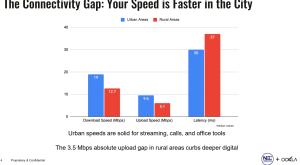
The study under the theme: The Great Divide: Urban vs. Rural Speeds conducted by the NCC in partnership with Ookla, a global leader in network intelligence and performance measurement revealed that despite this strong growth, the absolute speed gap between urban and rural networks maintained a consistent 5-6 Mbps difference.
According to study, which was sighted by TechnologyMirror the 5G technology’ remains the niche in connectivity adding that the urban 5G has reached an impressive download speeds (180-220 Mbps), but it trends downward and lacks latency gains over LTE, keeping it niche for now.
Sadly, the telecoms operators in Nigeria are winding up the use of the 3G technology and they are not expanding these assets ahead of a phase-out, and as such 3G speeds are flatlining.
The study further spotted usage concentration whereby there was a high percentage of mobile usage activity is concentrated in a dense area, creating an enduring performance gap noting quality issues with rural connectivity such that users experienced upload bottleneck that hinders advanced digital use.
Commenting on the study, the NCC said it is committed to addressing connectivity inequality by promoting targeted investment in rural areas and accelerating the national shift to 4G/5G networks to ensure equitable quality of experience (QoE) for all Nigerians.
Published quarterly, the report provide unbiased insights into network performance, coverage, and service quality across operators, states, and regions in Nigeria. By combining Ookla’s advanced analytics with the Commission’s regulatory oversight, this collaboration strengthens transparency, empowers consumers to make informed choices, and drives better service delivery and stronger network performance nationwide.
Through this initiative, the Commission promised to promote accountability, identify service gaps, and support evidence-based policy interventions that drive innovation, attract investment, and ensure Nigerians enjoy reliable, high-quality connectivity in line with our commitment to openness, innovation, and consumer protection.