 By
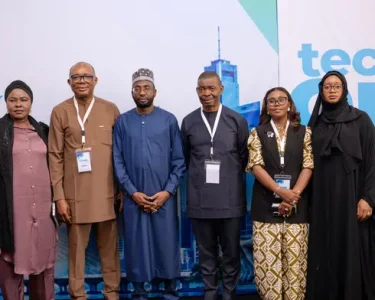
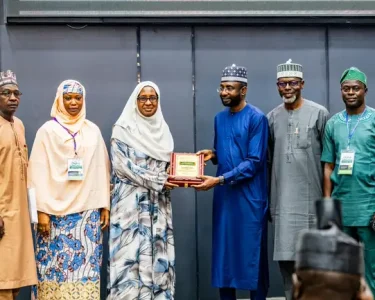
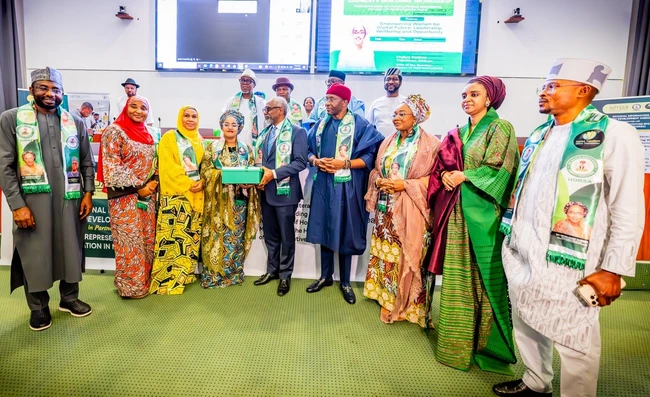
By The National Information Technology Development Agency (NITDA), has taken the digital literacy campaign to spouses of lawmakers in Nigeria by taking them through a digital training classes.
The training, which was in partnership with the House of Representatives Spouses Association (HORSA), was a specialised two‑day digital literacy and capacity‑building workshop with the theme “Empowering Women for a Digital Future: Leadership, Wellbeing, and Opportunity,” and was expected to equip them with the tools needed to navigate the modern digital economy and the unique demands of public life.
Declaring the workshop open on behalf of the Speaker of the House of Representatives, Mr Tajudeen Abbas, the Deputy Speaker, Mr Benjamin Okezie Kalu, said the workshop underscores the crucial role spouses play in supporting public office holders.
He described spouses as trusted advisers whose understanding of legislative responsibilities helps lawmakers perform more effectively.
He noted that the demanding nature of legislative work often places strain on family life, adding that empowering spouses with digital and leadership skills would strengthen their capacity to provide informed support and constructive feedback to their partners in public service.
He urged participants to take full advantage of the training, stressing that continuous learning is essential in an increasingly digital world.
Kalu further observed that many spouses already lead humanitarian and development initiatives in their communities, and that the skills gained from the programme would enhance communication, strategic planning, and resource mobilisation, thereby deepening their contribution to community development and national growth.
In his welcome address, the NITDA Director-General, Mr Kashifu Inuwa, said the initiative aligns with the Federal Government’s drive to build a sustainable digital economy by ensuring that no group is excluded from digital opportunities due to skills gaps.
Inuwa described women as critical drivers of Nigeria’s digital transformation, noting that empowering spouses of lawmakers with digital skills would strengthen leadership at home and positively influence legislative processes at the National Assembly.
He explained that NITDA is working with the Ministry of Education and global technology partners to train teachers nationwide, while over 54,000 public servants are currently enrolled in the Agency’s digital literacy programmes.
He also stated that through community champions deployed across the 36 states and the Federal Capital Territory, millions of Nigerians are being reached annually with basic digital skills training, stressing that national leaders must not be left behind in Nigeria’s digital transition. According to him, digitally literate spouses can play a vital role in encouraging technology‑driven governance, including ongoing efforts to digitise legislative processes.
In her goodwill message, the Leader of HORSA and wife of the Speaker, House of Representatives, Mrs Fatima Tajudeen Abbas, described the workshop as a historic milestone and the first comprehensive capacity‑building programme organised by the 10th Assembly for spouses of lawmakers.
She noted that public life in a digital age now extends beyond physical spaces into online platforms, making digital and financial literacy, cyber protection, and digital wellbeing essential skills for spouses of national leaders.
Abbas emphasised that the sessions on mental health, emotional resilience, entrepreneurship, and leadership were timely, as spouses of public office holders often shoulder invisible emotional responsibilities.
According to her, empowering women economically strengthens families and communities, adding that the knowledge gained from the workshop would not only support lawmakers behind the scenes but also enable women to contribute more meaningfully to national development in the digital economy.
The workshop offerred a comprehensive suite of skills, including financial and digital literacy-focused on using digital tools for business growth and personal finance management; cybersecurity and digital wellbeing-promoting online safety, data protection, and mental health resilience; and economic empowerment-unlocking opportunities in remote work, Business Process Outsourcing (BPO), and digital entrepreneurship.