By
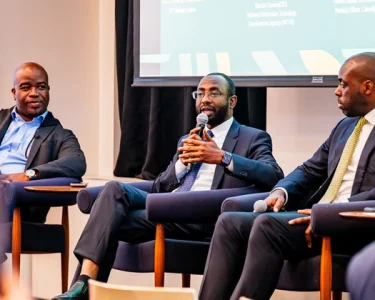
By The quest to get Africa youths involved in driving the digital future of Africa as well as effective industry stakeholders engagement was a focal point of discourse Digital Nigeria Conference 2025 hosted by the National Information Technology Development Agency (NITDA) with the Nigerian Vice President, Mr kashim Shettima and the Minister of Communication, Innovation and Digital Economy in attendance.
Delivering a keynote address at the officially opening of the 2025 edition of the Digital Nigeria International Conference and Exhibition, themed “Innovation for a Sustainable Digital Future: Accelerating Growth, Inclusion, and Global Competitiveness”, Shettima called the youths the “lifewire of our nation,” urging them to embrace their roles as innovators, disruptors, and dreamers who turn possibilities into profits.
He said: “You are the innovators, the disruptors, the dreamers who turn possibilities into profits. It is because of you that we are creating an enabling environment that encourages innovation. The language of our long-term stability is digital.”
On the government’s infrastructure efforts, the Vice President noted that major projects such as the Broadband Superhighway—designed to deliver high-speed internet across the country—and the Bridge and 7-7-4 initiatives, which aim to ensure that startups in remote towns like Gusau have the same digital access as those in major cities like Abuja and Lagos, are ongoing.
Underscoring the need for equal access to digital infrastructure, he noted that equitable connectivity is not just a matter of fairness but a prerequisite for national competitiveness in the digital age.
Shettima expressed optimism about a future where farmers use real-time market data to secure fair prices, young women in rural communities work remotely for global companies, and universities produce graduates equipped with the skills to thrive in the global digital economy.
According to him, digital transformation must be inclusive, touching every corner of the country and every segment of society.
Delivering his address, the Minister of Communications, Innovation and Digital Economy, Dr Bosun Tijani, reiterated the Federal Government’s commitment to building a sustainable, inclusive, and globally competitive digital economy, calling on stakeholders across sectors to work together to achieve Nigeria’s digital transformation goals.
According to him, Digital Nigeria serves as a national platform for dialogue, collaboration, and actionable strategies that will shape the country’s future in the digital era.
Tijani took the audience on a reflective journey through Nigeria’s digital history, noting that the liberalisation of the telecommunications industry in 1999 was a bold, transformative decision that changed the trajectory of the nation’s economy.
Before the policy reform, he recalled, only a handful of Nigerian families had access to telephones, and making international calls required visiting special centres and waiting in long queues.
“That decision marked the beginning of a new economy built on ideas and innovation. The introduction of mobile connectivity reshaped how Nigerians live, work, and connect, fuelling a digital revolution that continues to expand opportunities for millions,” the Minister explained.
The host of the event, the Director General of NITDA, Kashifu Inuwa, urged Nigerian youth to take the lead in driving Africa’s digital transformation, emphasising that the nation’s young population holds the key to a prosperous and inclusive future.
In his opening remarks Inuwa extended heartfelt appreciation to the Vice President of the Federal Republic of Nigeria for his presence, describing it as a powerful demonstration that this administration cares deeply about our youth.
The conference provides a dynamic platform for ecosystem stakeholders to showcase their work and explore emerging trends aimed at transforming the nation and continent’s digital future.
The Digital Nigeria Conference serves as a platform that bridges government and industry, fostering collaboration between policymakers, innovators, and private-sector leaders. It aims to harmonise regulatory frameworks, promote public–private partnerships, and drive the effective implementation of Nigeria’s national digital strategies for inclusive and sustainable growth.
Inuwa noted that the conference’s theme, Innovation for a Sustainable Digital Future: Accelerating Growth, Inclusion, and Global Competitiveness, aligns with President Bola Ahmed Tinubu’s Renewed Hope Agenda, particularly its focus on economic diversification through digitalisation, industrialisation and innovation.
He highlighted that Nigeria, with over 220 million people and an average age of 18, stands at a critical crossroads, one that could either unleash unprecedented prosperity or deepen socio-economic challenges if the nation fails to harness the creativity of its youth.
“If we harness the energy, the creativity and talent of our youth, we are not just going to power Nigeria, but we can power the entire Africa into a new era of prosperity. But if we fail to do that, if we fail to skill our youth, if we fail to provide a platform for them to create value, we are stunting the most valuable asset we have as a nation,” he noted.
The NITDA DG revealed that the 2025 edition of the conference has attracted over 4,800 participants from 12 countries and 25 Nigerian states, making it both a national and international gathering of innovators, policymakers, and investors.
He said, “This year’s event features 12 keynote sessions, 23 panel discussions, five workshops, and two expert masterclasses across five thematic tracks.”
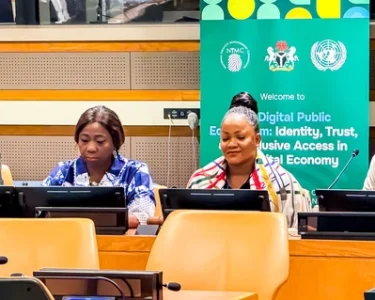
He further enumerated the five tracks: digital connectivity, digital public infrastructure and trust, artificial intelligence and emerging technologies, digital trade and innovation, and digital skills and literacy.
Inuwa called on participants to see the conference as more than a networking opportunity but as a catalyst for actionable collaboration.
“Every handshake, every dialogue, and every deal made here should be driven by one conviction: Nigeria can do it, and we will do it,” he said.
In his remark, National Commissioner, Nigeria Data Protection Commission (NDPC), Dr. Vincent Olatunji, urged stakeholders in the digital economy to unite in unlocking Nigeria’s vast potential in the sector.
Highlighting the exponential growth of the global digital economy, Olatunji noted that there are currently over 18.8 billion connected devices serving a global population of 8.2 billion people.
This, he said, underscores the transformative power of technology in business, communication, and governance.
He stressed that Nigeria possesses both the human and material resources to lead in this space but must overcome the challenge of fragmentation by fostering synergy across sectors.
He described the country’s youthful population—65% of whom are tech-savvy as a strategic advantage that must be harnessed. “Technology is the only language they understand,” he said, calling for platforms like the conference to channel their energy toward innovation and disruption.
Citing global tech disruptors like Uber, Booking.com, and Amazon as examples of how technology can redefine industries without owning traditional assets, he urged Nigeria to adopt similar models.