By
By There is the need for critical stakeholders in across the African continent to foster collaboration between private sector innovators, public institutions, and communities to accelerate adoption of sustainable finance models.
It is also essential for them to strengthen policy and regulatory frameworks that enable trust, accountability, and scale in sustainable finance systems.
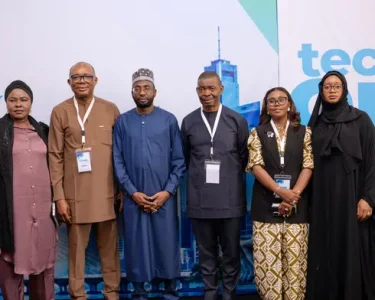
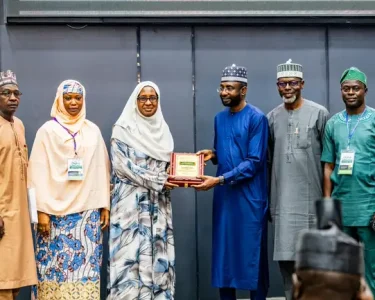
Those and others are part of the takeaways from the Sustainable Finance Summit 2.0 under the theme “Financing Resilience: Digital Innovation and AI for Climate-Smart Communities” organised by the Stanbic IBTC Holdings Plc, in partnership with the Lagos Business School Sustainability Centre (LBSSC).
The event brought together more than 500 leaders from banking, fintech, development finance, policy, technology, and academia, creating a platform to chart Africa’s path towards inclusive and climate-resilient growth.
Thoughts shared by experts and stakeholders at the Summit harped on the need for Africa’s global role in sustainable finance by investing in homegrown innovations and AI-driven solutions. In his welcome address, the Chief Executive, Stanbic IBTC Bank, Mr Wole Adeniyi reaffirmed Stanbic IBTC’s commitment to leveraging finance and innovation to address Africa’s pressing climate and development challenges.
He emphasised that the Summit was not just about dialogue but about forging actionable pathways where finance, AI, and sustainability intersect to create resilient communities.
Professor of Business Ethics and Member of the Management Board at Lagos Business School, Prof. Kemi Ogunyemi, in his opening noted that while Africa stood on the sidelines of the first three revolutions, the fusion of AI and sustainable finance provides a golden opportunity to lead this time.
“The intersection of sustainable finance and AI will be a game-changer not just for Nigeria but for the continent,” she noted, urging leaders to be bold, ethical, and forward-looking in leveraging technology for resilience.
Country Director of Oracle Nigeria, Mr Segun Ajayi, argued that Africa’s image as a “high-risk” market can shift to “high-potential” through the intelligent use of AI in predictive climate modelling, carbon markets, and risk-based financing.
He emphasised that AI can unlock transparency and accountability in ESG reporting while enabling smarter deployment of capital into green infrastructure. His call to action was clear: “Africa must not just consume digital innovations but create and scale them to meet its financing needs.”
Also speaking, Deputy Chief Executive of Stanbic IBTC Bank, Bunmi Dayo-Olagunju, provided a financial sector lens, noting that resilience financing is now as important as growth financing.
She stressed that African banks and investors must align their portfolios with long-term community needs by embedding sustainability principles and mobilising blended finance. She cited Stanbic IBTC’s approach to financing climate-smart communities as an example of how institutions can balance profitability with societal impact.
Meanwhile, an insight presentation by the Partner, Tech Risk & Assurance at KPMG Nigeria, Mr Lawrence Amadi, cautioned that while AI can enhance efficiency, risk modelling, and transparency, it also comes with significant risks if not properly governed.
He pointed out that AI systems are only as unbiased as the data that trains them, and without robust frameworks for oversight, accountability, and ethics, their deployment could worsen exclusion and inequity.
At the same time, he noted the potential of AI to redefine trust in financial systems, improve ESG reporting, and create new pathways for resilience financing when embedded responsibly.
In the closing remark at the event, which featured a panel session and a fireside chat, Acting Chief Executive, Stanbic IBTC Holdings Plc, Kunle Adedeji, reaffirmed Stanbic IBTC’s role as a catalyst for sustainable development.
He called on leaders across sectors to embrace courageous collaboration: “We cannot afford to wait for others to lead Africa’s future. The time to act is now, and the responsibility is ours.”