 By
By Stakeholders, experts and public service executives have lamented the dire impact of poor data centre infrastructure management across government and the private sector.
They noted that Africa’s digital economy growth will depend on managing rising cyber threats.
According to them, scaling data infrastructure and addressing power and interconnectivity challenges are affecting the operating environment.
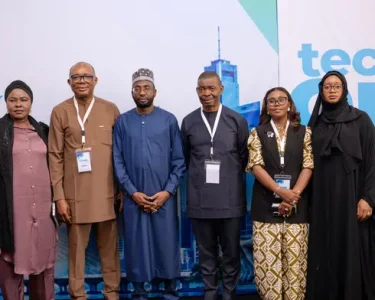
They laid bare their minds at the IoT West Africa 2026 Conference and Data Centre Cloud Expo held in Lagos. Southwest Nigeria, where the National Commissioner and Chief Executive Officer of the Nigeria Data Protection Commission, Dr Vincent Olatunji, warned that rapid digital expansion was being matched by rising cyber threats.
Olatunji said cyberattacks now occur every 39 seconds globally, with cybercrime losses estimated at 10.5 trillion dollars annually, noting that Nigeria records over 4,000 cyberattacks weekly, accounting for about 45 per cent of incidents in Africa, while financial losses exceeded ₦12 billion in 2024.
He added that global data generation had reached about 402.89 million terabytes daily and was projected to grow from 181 zettabytes to 221 zettabytes, saying, “Data is now the new oil, driving everything from IoT to cloud services and digital platforms,” he said, adding that Nigeria’s digital economy is valued at 18.3 billion dollars and could double within five years.
Also during a fireside chat with the theme “Role of Colocation in Enabling Africa’s Data Centre Transformation: Opportunities and Challenges”, industry leaders identified interconnectivity, power and affordability as critical to scaling the sector.
The Managing Director of Equinix West Africa, Mr Wole Abu, stressed the need for interconnected ecosystems, adding that “A data centre without interconnection is like a ship, but an interconnected one is a port that enables trade and economic growth.”
African Infrastructure Investment Managers’ Mr Akinsehinwa Akin-Taylor said that while capital was available, investors were becoming more cautious.
“The focus is now on bankability, operating history and quality assets that can support long-term growth,” he said.
Mr Ifeanyi Otudoh of MTN said Africa must build local capacity and ensure inclusive access.
“We must put digital capability in the hands of African innovators and ensure secondary cities are not left behind,” he said.
Meanwhile, at a panel session on “Role of Digital Twins for Data Centre Optimisation in Nigeria”, experts said the adoption of digital twin technology could significantly improve efficiency and reduce failures in data centres.
Mr Johnson Agogbua, Chief Executive Officer of Kasi Cloud, said digital twins would enhance power optimisation and predictive maintenance.
“The biggest headache in Nigeria is power. Digital twins help you understand how power behaves and allow you to visualise problems before they occur,” he said.
“If adopted, failure and risk will reduce significantly, and efficiency levels can improve rapidly,” he said.
The experts agreed that integrating data infrastructure, strengthening cybersecurity and deploying emerging technologies such as digital twins would be critical to unlocking Africa’s multi-trillion-dollar digital economy potential.