 By
By The stakeholders in the Nigerian telecommunications flagged-off discussions aimed at providing a level playing field for all class of players in the industry.
The discourse, which is at the auspices of the Nigerian Communications Commission (NCC) was part of a comprehensive study on the level of competition in the telecommunications sector that hoped to address concerns around market dominance and ensure fair, effective and sustainable competition.
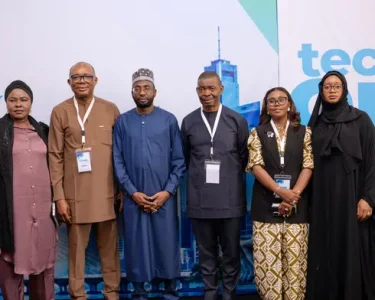
At the policy formulation tagged: Study on “The Level of Competition in The Nigerian Telecommunications Industry”, and held in collaboration with PricewaterhouseCoopers in Lagos, Southwest Nigeria, the telecoms players sort for respite for the less dominant players in the industry.
After listening to a presentation from a representative of Akolawole Odunlami, who is Director, Strategy, PwC Network, the consensus of the players was harped when the Chief Executive Officer of Broadbased Communications Limited, Mr Chidi Ibisi during the question-and-answer session.
According him, the small telecoms operators in the country are struggling to survive urging that the United States of America model that reserves operational areas for small players should be adopted.
However, speaking earlier in an opening remark, the Head of Competition and Tariff, Policy, Competition and Economic Analysis Department, NCC, Mrs Omotayo Mohammed said the exercise was necessary to validate existing competition policies against current market realities.
Mohammed said the telecommunications sector, which contributed about 9.1 per cent to Nigeria’s Gross Domestic Product (GDP) as of the third quarter of 2025, had undergone significant changes in revenue models, investment patterns and market interactions.
She noted that rapid technological change, evolving consumer behaviour, rising investment costs and heightened competitive pressures had increased concerns around market concentration, barriers to entry and the sustainability of smaller players.
According to her, the last comprehensive, industry-wide competition study conducted by the Commission was concluded in 2013, while subsequent studies focused on specific services and market segments.
Mohammed explained that developments in technology, market structure and consumer behaviour now necessitated a holistic reassessment of competition across the telecommunications value chain.
She said the study was diagnostic and evidence-based, stressing that it was not designed to pre-judge outcomes or single out any operator.
Director, Strategy, PwC Network, Mr Akolawole Odunlami, said the study was timely given the slowing growth and structural shifts in the global telecommunications industry.
Odunlami said the global telecoms sector was projected to reach about 1.3 trillion dollars by 2028, but growth had slowed to about two to three per cent annually, compared to about four per cent year-on-year before the COVID-19 pandemic.
He noted that while subscriber numbers in sub-Saharan Africa continued to increase, most operators were experiencing declining average revenue per user (ARPU), intensifying competition and placing pressure on traditional business models.
According to him, consumer behaviour has changed, with users now digital-first and seeking experiences powered by connectivity rather than just voice or data services.
“Today’s consumers are not just buying data; they are looking for digital experiences such as entertainment, financial services, self-service applications and social connectivity, with data serving as the backbone,” Odunlami said.
He said globally, telecommunications operators were rethinking their business models by integrating lifestyle services into their platforms, allowing users to access utilities, health services and fintech offerings through mobile applications.
Odunlami added that over-the-top (OTT) platforms such as WhatsApp and Microsoft Teams had shifted traditional voice and messaging revenues, making data the primary driver of communication and service delivery.
He said the evolution of technology, including the rollout of 5G and future 6G networks, would further reshape competitive dynamics, although adoption in Nigeria and sub-Saharan Africa remained constrained by infrastructure gaps, low investment in research and development, and slow uptake of 5G-enabled devices.
According to him, short to medium-term 5G adoption in sub-Saharan Africa was projected at 14–17 per cent, significantly below global averages, underscoring the need for policy and investment support.
Odunlami said the NCC-PwC study would assess market dynamics, identify sources of market power, and provide evidence-based recommendations to promote fair competition, innovation and service quality.
He added that the study would rely on accurate, timely and complete data submission by stakeholders, with confidentiality assured under existing non-disclosure agreements.
The NCC said the findings of the study would guide proportionate, forward-looking regulatory interventions aimed at preventing anti-competitive practices, protecting consumers and ensuring the long-term stability of Nigeria.